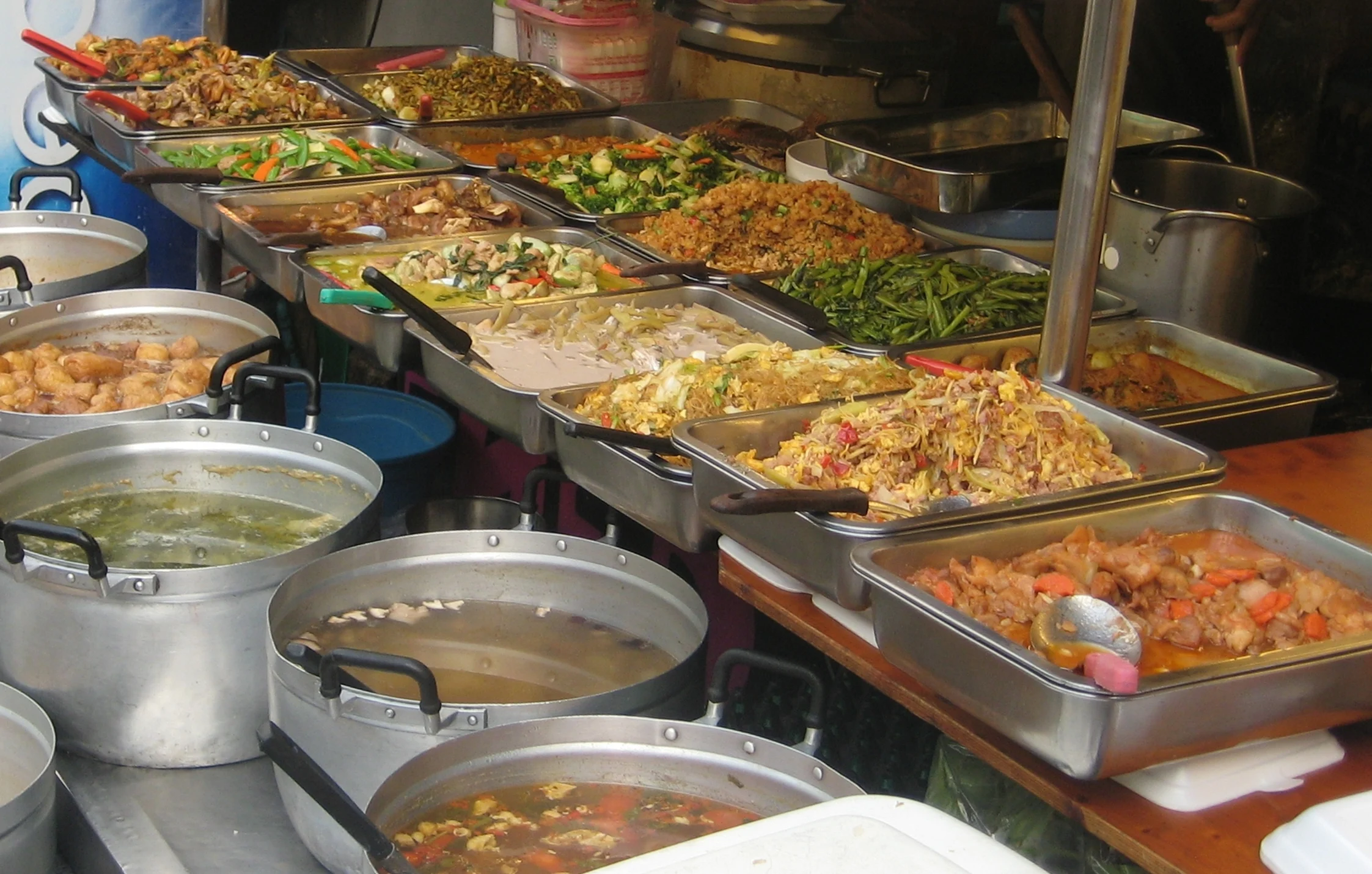
In Thailand, some of the best food you will ever eat costs less than a coffee back home and is cooked on a single wok balanced over a gas burner on the pavement. Street food is not a novelty here: it is how millions of people eat breakfast, lunch and dinner. This guide tells you what to order, where to find it and how to eat well and safely, from Bangkok’s busiest night markets to the quieter streets of Chiang Mai.
How Thai street food works
Most stalls do one thing and do it brilliantly. One vendor makes only noodle soup; the next only grilled pork skewers; another just mango sticky rice. Many keep regular hours and spots, and the best ones have queues of office workers and taxi drivers. A dish usually costs somewhere between 50 and 120 baht at a simple stall in Bangkok, a little more in tourist hot spots.
Thai cooking balances sweet, sour, salty, bitter and spicy. On most tables you will find a caddy of condiments – sugar, fish sauce, dried chilli flakes and vinegar with sliced chillies – so you can season your noodles exactly as you like. Locals almost always do.
Ten dishes to try
1. Pad kra pao
Minced pork or chicken stir-fried with holy basil, garlic and lots of chilli, served over rice with a crispy-edged fried egg (khai dao) on top. It is Thailand’s ultimate quick lunch. Ask for mai phet if you want it less spicy.
2. Pad thai
Yes, it is famous for a reason. Rice noodles are stir-fried with egg, tofu, tamarind, dried shrimp and bean sprouts, then finished with crushed peanuts and lime. A good one is tangy and smoky from the wok.
3. Som tam
Green papaya salad, pounded to order in a clay mortar with chilli, garlic, lime, fish sauce, palm sugar, tomatoes and peanuts. It originates in the northeast (Isan) and is usually eaten with sticky rice and grilled chicken (gai yang).
4. Moo ping
Skewers of marinated pork grilled over charcoal, sweet and smoky – the classic morning snack with a little bag of sticky rice.
5. Boat noodles (kuay teow reua)
Small bowls of rich, dark, spiced broth with noodles and beef or pork. The bowls are small, so people order several.
6. Khao man gai
Poached chicken on rice cooked in chicken fat and stock, served with a cup of clear soup and a punchy sauce of fermented soybean, ginger and chilli. Simple, comforting and perfect when you need a break from spice.
7. Tom yum
The hot and sour soup scented with lemongrass, kaffir lime leaves and galangal. Look for tom yum goong with river prawns.
8. Khao soi
Northern Thailand’s signature dish and a reason in itself to visit Chiang Mai: egg noodles in a rich coconut curry broth, topped with a tangle of crispy fried noodles, with pickled mustard greens, shallots and lime on the side.
9. Mango sticky rice
Ripe mango with sweet coconut sticky rice and a drizzle of salted coconut cream. Best in the mango season, roughly March to June.
10. Roti
A thin, crispy pancake fried in butter, often filled with banana and egg and drizzled with condensed milk. Dangerously good at midnight.
Where to eat in Bangkok
- Yaowarat (Chinatown) – after dark, the main road fills with stalls selling seafood, noodles, dim sum and desserts. It is busy, loud and brilliant.
- Banglamphu and the old town – around Khao San Road’s quieter side streets and Phra Athit you will find long-running shops serving noodles, curries and desserts.
- Victory Monument – a hub for boat-noodle shops.
- Markets – weekend markets, night markets and fresh markets all have food sections; a fresh market in the morning is a great way to see everyday Thai food culture.
Find a place to stay in our Bangkok guide – staying near the river or the old town puts you within walking distance of many of these spots.
Where to eat in Chiang Mai
Chiang Mai’s food is distinct from Bangkok’s: more herbs, less coconut (khao soi aside), and dishes like sai oua (spiced northern sausage), nam prik noom (green chilli dip with vegetables and pork crackling) and khan tok dinners. The Saturday and Sunday walking-street markets, the stalls around Chang Phueak Gate at night and the food court at Warorot market are great starting points. See our Chiang Mai stays inside and around the old city walls.
Eating safely
- Follow the crowd. A busy stall means fresh ingredients and fast turnover.
- Watch it being cooked. Hot food straight from the wok or grill is generally the safest choice.
- Water and ice. Drink bottled water. Ice in tube shapes with a hole in the middle is factory-made and widely considered safe.
- Allergies. Peanuts, shellfish and fish sauce are everywhere. Carry a card in Thai explaining your allergy.
- Pace yourself on chilli. “A little spicy” for a Thai cook may still be very spicy for you.
Useful phrases
- Sawasdee khrap/kha – hello (men say khrap, women kha).
- Mai phet – not spicy. Phet nit noi – a little spicy.
- Aroi mak – very delicious.
- Kep tang – the bill, please.
- Khop khun khrap/kha – thank you.
Street food etiquette
Thais usually eat with a spoon in the right hand and a fork in the left, using the fork to push food onto the spoon; chopsticks are for noodle soups. Sharing dishes is normal when eating as a group. Pay at the end, and keep small notes for stalls – a 1,000-baht note can be hard to change. Tipping is not expected at stalls, though rounding up is appreciated in restaurants.
Want to turn a meal into a lesson? Cooking classes are popular in both Bangkok and Chiang Mai, often starting with a trip to a local market. Our activities team can book one for you. And if you are planning your next foodie adventure, read our Swahili food guide or explore Thailand.