Japan has a reputation for being complicated – a different alphabet, unspoken rules and a rail network that looks like a circuit board. In reality it is one of the easiest, safest and most rewarding countries for a first trip abroad in Asia. Trains run on time, streets are spotless, and people go out of their way to help. This guide covers what you need to know before you go, a classic first-timer route, and the small customs that make a big difference.
When to go
Spring (late March to early May) and autumn (October to early December) are the classic seasons. Cherry blossom usually peaks in Tokyo and Kyoto around late March or early April, and the autumn leaves turn red and gold from mid-November in the cities. Both seasons are beautiful – and busy, so book early.
Summer (June to August) starts with the rainy season and turns hot and humid, but it is also festival season, with fireworks and street parties. Winter is cold and crisp, with clear skies in Tokyo, snow in the mountains and the north, and fewer crowds at the temples. Avoid Golden Week (around late April to early May) and the New Year holidays if you can: that is when Japan itself travels.
The classic route: Tokyo, Kyoto and beyond
For a first trip of 10 to 14 days, the “golden route” is hard to beat.
Tokyo (4 nights)
Tokyo is not one city so much as dozens of neighbourhoods stitched together. Spend a day in Asakusa around Sensō-ji temple and the old-fashioned shopping street leading to it; another in Shibuya and Harajuku for the famous scramble crossing, street fashion and the calm of Meiji Jingu shrine; and an evening in Shinjuku, where the neon of Kabukichō sits next to Omoide Yokochō’s tiny smoky yakitori bars. Add a museum day, a food market and a teamLab digital art exhibition and you will barely scratch the surface. Browse our Tokyo stays – Shinjuku is a convenient base with trains in every direction.
Mount Fuji and the lakes (1–2 nights)
On a clear day, the area around Lake Kawaguchi gives postcard views of Mount Fuji, and it is the perfect place to try a ryokan, a traditional inn with tatami rooms and hot-spring baths. Clear mornings are most common in the colder months; in summer the mountain often hides in cloud.
Kyoto (3–4 nights)
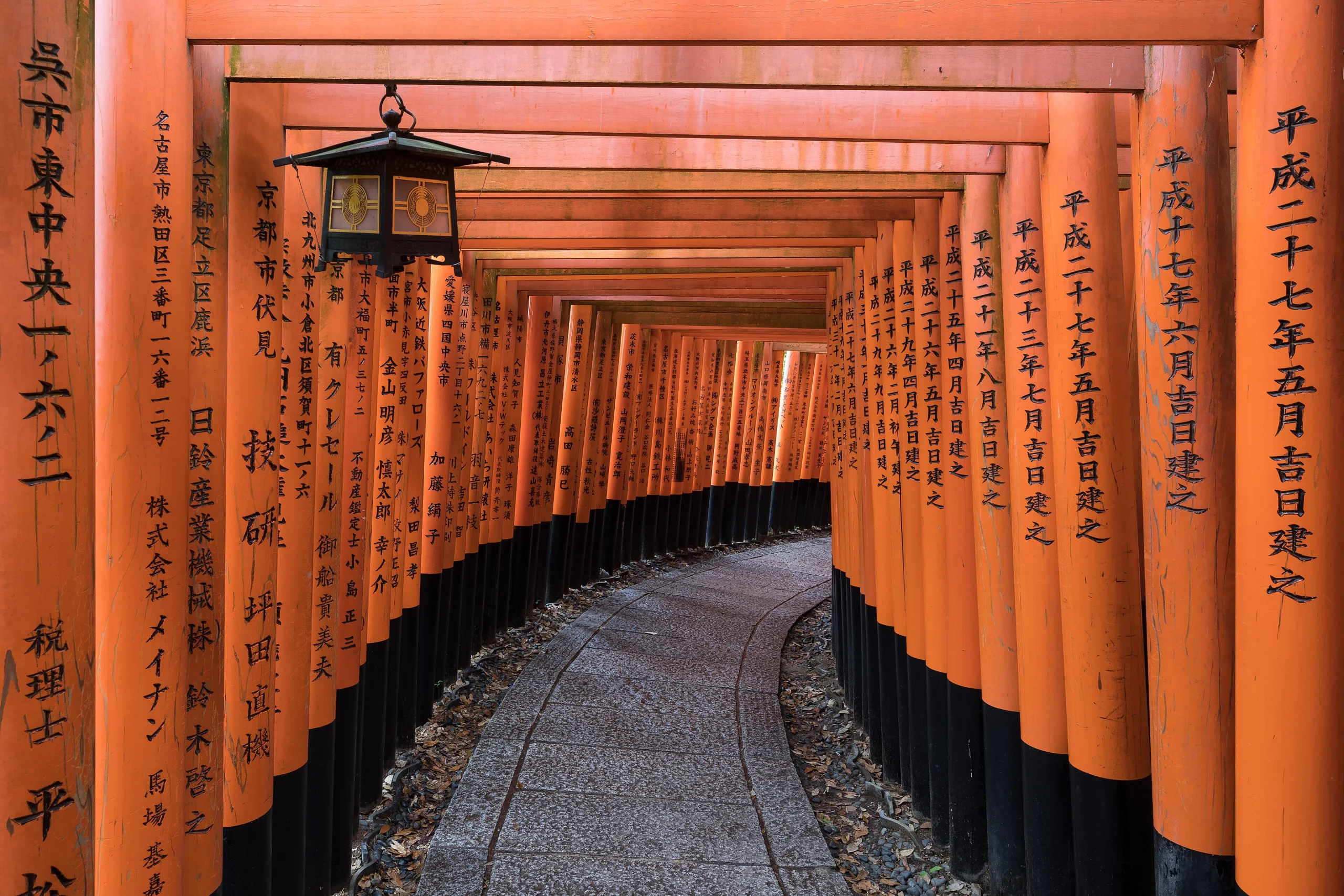
Japan’s old imperial capital has well over a thousand temples and shrines. Do not miss the thousands of vermilion torii gates at Fushimi Inari (go early in the morning or late in the afternoon), the bamboo grove and riverside of Arashiyama, the golden pavilion of Kinkaku-ji, and an evening walk through the lantern-lit lanes of Gion and Higashiyama. Look through our Kyoto stays, from friendly hostels near the station to riverside ryokan.
Easy add-ons
Nara, under an hour from Kyoto, has a giant bronze Buddha and bowing deer in its park. Osaka is a street-food capital – try takoyaki and okonomiyaki in Dōtonbori. Hiroshima and the island of Miyajima make a moving and beautiful two-day detour.
Getting around
Japan’s trains are fast, frequent and punctual. The Shinkansen (bullet train) links Tokyo and Kyoto in a little over two hours. Load a rechargeable IC card such as Suica or PASMO onto your phone or buy a physical card: you tap in and out on trains, subways and buses, and pay in convenience stores too.
Japan Rail Passes became much more expensive in 2023, so for a simple Tokyo–Kyoto–Osaka trip, individual tickets are often cheaper. Do the maths on your route before buying one. Luggage forwarding services (takkyūbin) can send your suitcase from hotel to hotel for a modest fee – a game-changer on crowded trains.
Money and connectivity
Cards are widely accepted in cities now, but Japan still likes cash, especially at small restaurants, temples and in the countryside. Convenience-store ATMs (7-Eleven and others) reliably accept foreign cards. An eSIM or pocket Wi-Fi makes navigation and translation apps much easier.
Tipping is not part of the culture and can cause confusion; excellent service is simply expected. Some hotels charge a small local accommodation tax per person per night.
Etiquette that matters
- Shoes off when entering homes, ryokan, some temples and restaurants with raised tatami floors. Look for the step up and the slippers.
- Quiet on public transport: no phone calls, and keep conversations low.
- Queue neatly on platforms, in the lines marked on the floor.
- Bins are rare: carry a small bag for your rubbish and dispose of it at your hotel or convenience store.
- Do not eat while walking in most places; stand next to the stall or vending machine instead.
- Chopsticks: never stick them upright in rice or pass food chopstick-to-chopstick – both are associated with funerals.
- Onsen: wash thoroughly at the showers before getting into the bath, keep your small towel out of the water, and check the tattoo policy in advance.
What to eat
Eating in Japan is a highlight at every budget. Try a bowl of ramen at a ticket-machine counter, conveyor-belt sushi, crispy tonkatsu, tempura, yakitori with a cold beer, and a full kaiseki dinner at least once – a seasonal procession of small, beautiful courses. Convenience stores are genuinely good for breakfast: onigiri rice balls, egg sandwiches and decent coffee. Department-store food halls (depachika) are a feast for the eyes, and good for a picnic.
Where to stay
Japanese accommodation ranges from capsule hotels and spotless hostels to business hotels with compact, efficient rooms, and then to ryokan where dinner and breakfast are part of the experience. Rooms in cities are smaller than many visitors expect, so check sizes – we list them in square metres on every room. A good mix for a first trip is a central business hotel in Tokyo, one night in a ryokan with an onsen, and a characterful stay in Kyoto.
Start planning with our Japan destination guide, and if you are combining Japan with other stops in Asia, our Thailand street food guide is the perfect next read.
A first-timer’s checklist
- Check passport validity and whether you need a visa for your nationality.
- Book cherry-blossom and autumn-leaf stays months ahead.
- Get an IC card and an eSIM or pocket Wi-Fi.
- Carry some cash, a small towel and a rubbish bag.
- Pack shoes that slip on and off easily.
- Learn a few phrases: konnichiwa (hello), arigatō gozaimasu (thank you very much), sumimasen (excuse me / sorry).
Go with an open mind and a light suitcase, and Japan will reward you at every turn.