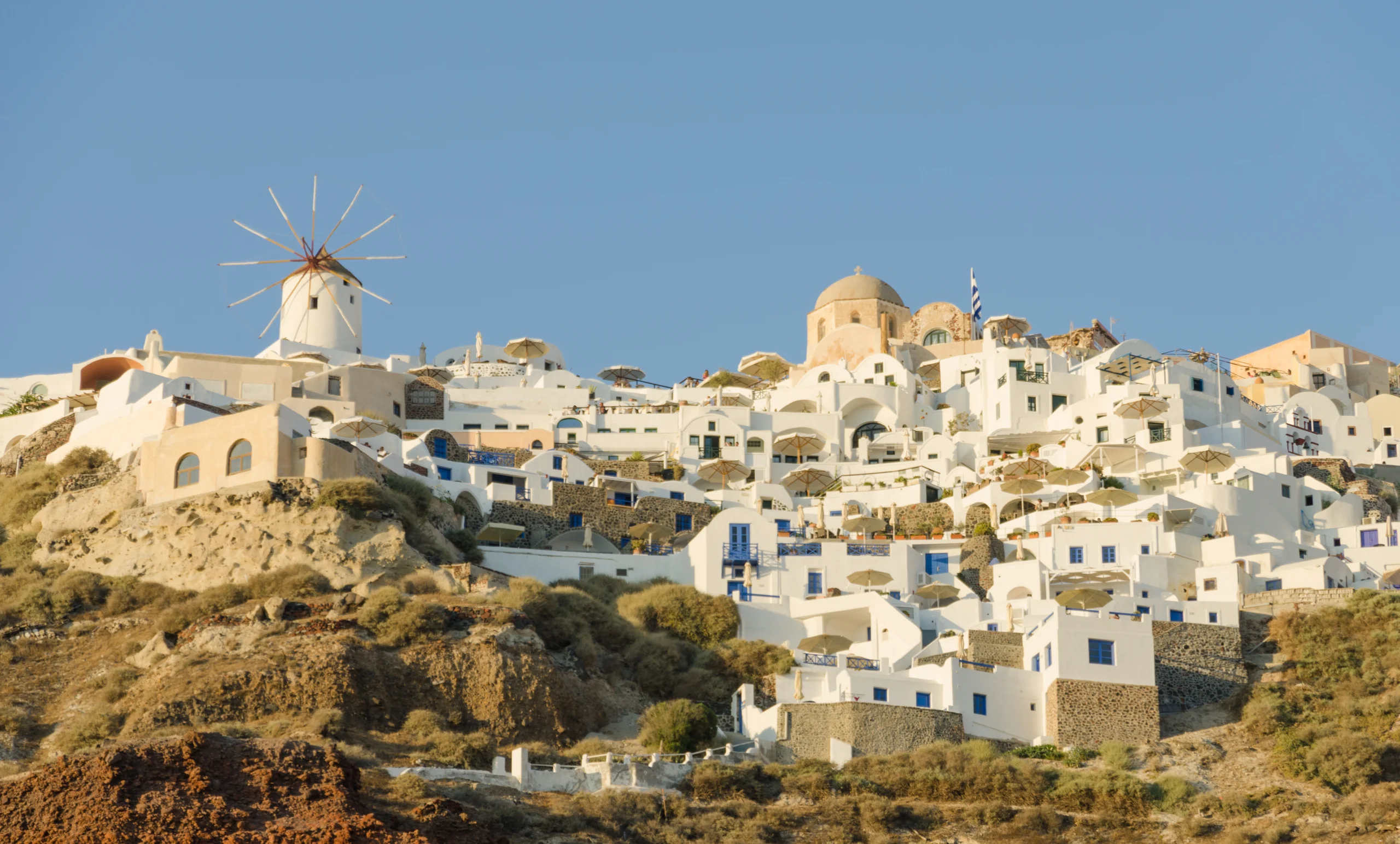
Greece has around 6,000 islands and islets, of which roughly 200 are inhabited, and the dream of hopping between them on a ferry – whitewashed villages, blue domes, grilled octopus at a harbour taverna – is one of the great travel experiences. It is also easy to get wrong: too many islands, too little time, and hours lost in ports. This guide helps you plan a hop that feels relaxed, with sample routes, ferry tips and when to go.
Understand the island groups
Greek islands are clustered into groups, and ferries mostly run within a group or between a group and the mainland. Mixing groups is possible but often means a long journey or a flight via Athens.
- The Cyclades – the classic image of Greece: Santorini, Mykonos, Paros, Naxos, Milos, Ios, Folegandros and more. Well connected by ferry from Piraeus and Rafina near Athens, and to each other.
- Crete – Greece’s largest island, almost a country in itself, with Venetian harbours, mountain gorges and wonderful food. Connected to Piraeus by overnight ferries and to Santorini by fast boats in season.
- The Dodecanese – Rhodes, Kos, Symi, Patmos and others close to the Turkish coast, with medieval towns and Italian-era architecture.
- The Ionian Islands – Corfu, Kefalonia, Zakynthos and Lefkada off the west coast: greener, with Venetian influences and turquoise bays.
- The Saronic Islands – Aegina, Hydra and Poros, a short hop from Athens and ideal for day trips or a quick first taste.
When to go
Late May, June and September are the sweet spot: warm sea, long days, full ferry timetables and fewer crowds than July and August. October is still lovely in the south, especially on Crete and Rhodes, but timetables thin out and some hotels close for the winter – many Santorini and Mykonos hotels shut from early November to spring. In high summer, the strong meltemi wind can make the Aegean choppy and occasionally cancels smaller boats.
How long, and how many islands?
The golden rule: fewer islands, more nights. Each move costs most of a day once you include checking out, getting to the port, the crossing and checking in. Allow at least three nights per island, and two nights in Athens at the start or end.
Three routes that work
Classic Cyclades (10–12 nights)
Athens (2) → Naxos (3) → Paros (3) → Santorini (3) → fly home or back to Athens. Naxos has long sandy beaches, mountain villages and great produce; Paros mixes pretty towns like Naoussa with good ferry links; Santorini is the grand finale, with its caldera views and sunsets. Base yourself in Athens near the Acropolis – our Athens stays include rooftop views of it – and see our Santorini hotels for the last leg.
Quiet Cyclades (10 nights)
Athens (1) → Milos (4) → Folegandros (3) → Sifnos (2) → Athens. Volcanic beaches and boat trips on Milos, cliff-top villages on Folegandros and the island famous for its cooking, Sifnos. Fewer crowds, more charm.
Santorini and Crete (10 nights)
Fly into Santorini (3) → fast ferry to Heraklion → Rethymno or Chania (7). Crete deserves time: the old Venetian harbour of Chania, the Samaria Gorge, the Minoan palace at Knossos, beaches like Elafonisi and Balos, and some of Greece’s best food. Fly home from Chania or Heraklion.
Ferries: what you need to know
- Conventional vs high-speed. Big conventional ferries are slower but cheaper, carry cars and cope better with wind; you can sit out on deck. High-speed catamarans are quicker but pricier, and can be bumpy in rough seas.
- Book ahead in summer, especially for August and for car spaces. In spring and autumn you can be more flexible, but check that the route actually runs on your day.
- Check which port. Athens has three: Piraeus (the main one), Rafina and Lavrio. Rafina is closer to the airport and handy for some Cyclades routes.
- Arrive early – at least 30 to 60 minutes before departure, more with a car.
- Delays happen, particularly in windy weather. Do not plan a ferry on the day of your flight home.
- Seasickness: sit low and in the middle on fast boats, look at the horizon, and take tablets before you sail if you are prone to it.
Getting around on the islands
Larger islands have public buses (KTEL) linking the main town, port and popular beaches. Renting a car or quad gives you freedom on Naxos, Paros, Milos and Crete; on small islands you may only need your feet and the occasional taxi. Note that you generally need a valid licence for the category of vehicle you rent, and many companies ask for an International Driving Permit from non-EU visitors. Our team can help with car hire and transfers on request.
Eat like an islander
Each island has its own specialities, so ask what is local. Try fresh fish grilled simply with lemon and olive oil, grilled octopus, fava (yellow split-pea purée) on Santorini, kitron liqueur on Naxos, dakos (barley rusk with tomato and cheese) and slow-cooked lamb on Crete, and whatever the taverna’s cook made that morning. Dinner starts late – 9pm is normal in summer.
Money-saving tips
- Travel in June or September rather than July and August.
- Stay in the second village rather than the most famous one: on Santorini, Oia is beautiful but pricey; Firostefani or Imerovigli have the same caldera views.
- Take conventional ferries instead of high-speed ones.
- Eat your main meal at lunch, and look for tavernas away from the harbour front.
- Look for our current deals before you book.
Plan your hop
Start with our Greece destination guide and pick two or three islands that match your style: lively, quiet, foodie or romantic. If you are planning more than one Mediterranean trip, read about seeing Egypt in one trip next. Kalo taxidi – have a good journey!